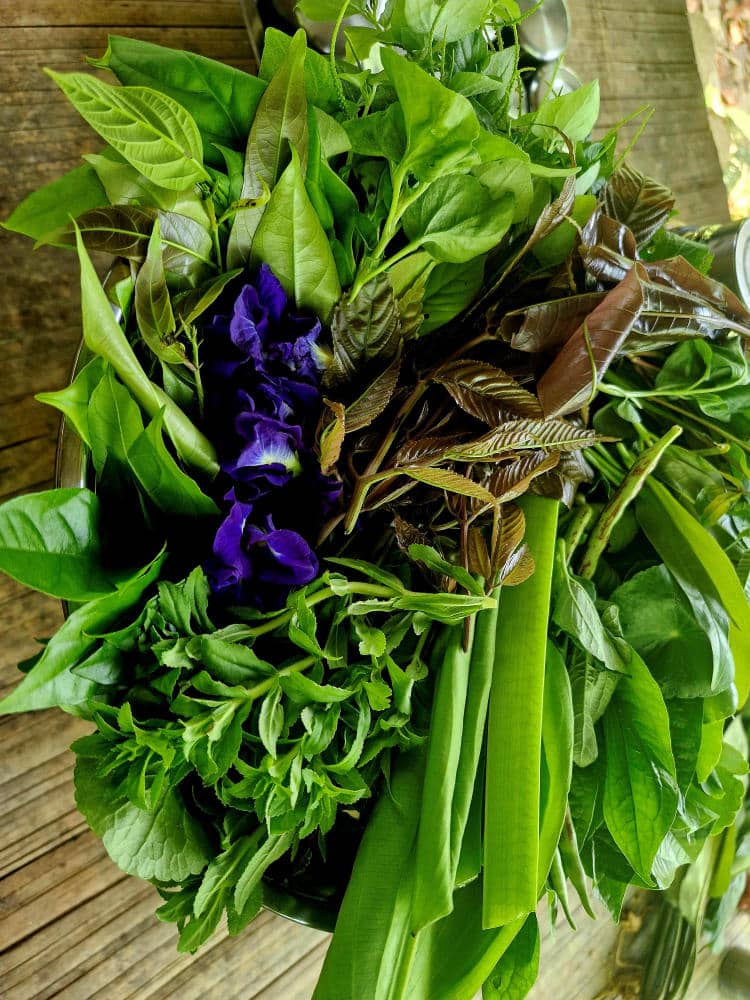
A hyper-diverse Food Jungle for aspiring modern-day foragers adapting to the Anthropocene.
Feun Foo Permaculture & Rewilding
Feun Foo Permaculture & Rewilding is a small, 8-rai forest garden, located on a steep hillside in the foothills of the Cardamom Mountains. Bordering our land is a Wildlife Sanctuary – macaques, hornbills and wild elephants frequent our garden. We inhabit the ancestral lands of the Chong people, one of the original “perma-cultures” of the region.
‘Feun Foo’ (ฟื้นฟู) means “to revive/rehabilitate/restore/rewild,” and the name aptly sums up our mission. We help restore Nature to original beauty, and we revive an ancient way of plant cultivation, so that it may lead us into a regenerative future. The rewilding of the land and the rewilding of its human stewards ought to be one and the same process, a journey of reconnecting to the land and its myriad inhabitants, and a rediscovery of our own true human Nature. Only then can we – once again – become a functioning part of the ecosystem we inhabit.
Moreover, we also strive to decrease dependence on the doomed global industrial system, increase self-sufficiency, build local food systems resilience, and adjust plant cultivation techniques to an increasingly erratic climate regimen.
Due to a keen interest in anthropology/ethnology we cultivate a “deep-time perspective,” viewing us humans in our evolutionary and ecological context. Inspired by indigenous cultures and their various horticultural techniques from all over the tropics, we strive to nudge the ecosystem we inhabit to produce year-round abundance of everything we humans really need for a decent life – developing a practice we’ve termed “primitive permaculture.”
The resulting Food Jungle is a diverse, multi-strata mosaic of useful plants: fruit-, nut- & forest trees, seasonal vegetables, medicinal herbs, ornamentals, etc.
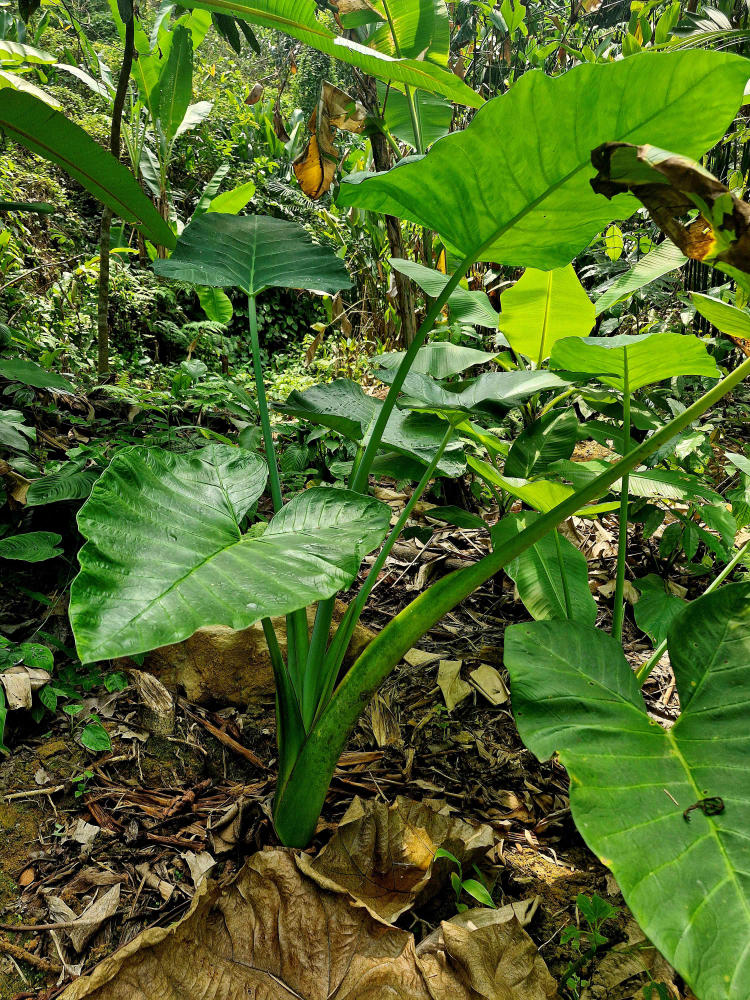
Since rice is highly susceptible to climatic shocks and supply chain issues, we have a strong focus on alternative staple crops (tubers, nuts, etc.) that can be included into a tropical forest agro-ecology, tree crops, as well as (semi-)wild fruit & vegetables that are more resilient.
Our drinking water comes from a spring, and we grow a large part of our food ourselves (including staple crops). We keep chickens and rabbits, have a few beehives, and harvest fish, eels, shrimp, and other aquatic foods from our pond.
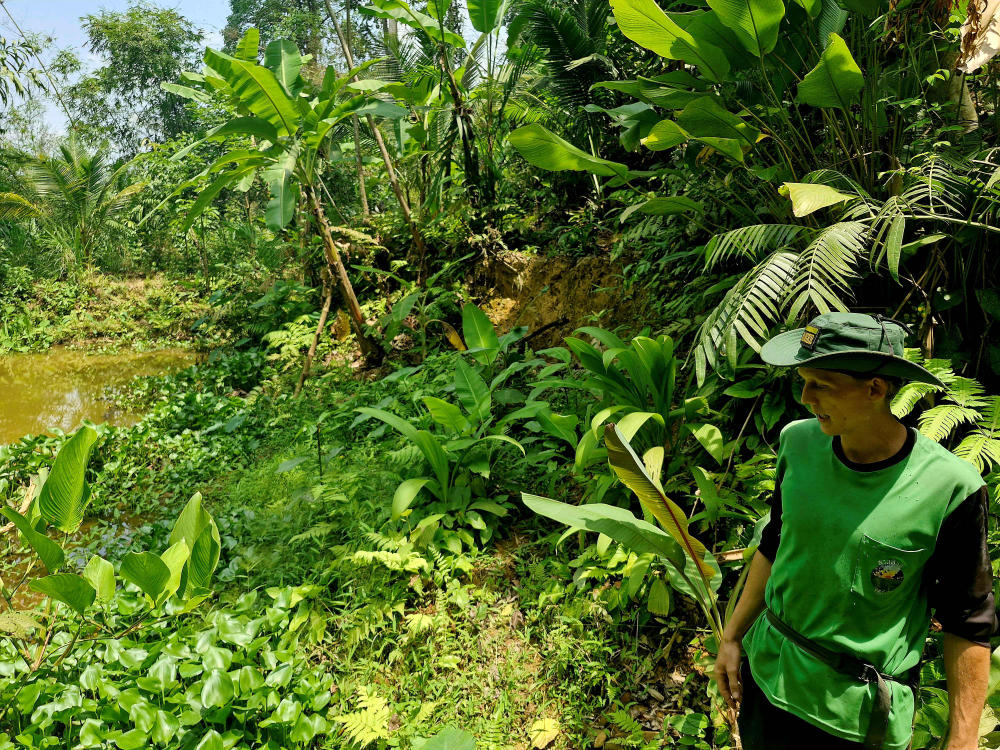
Additionally, all cooking is done on an open fire, since we can source firewood locally & for free. After living without electricity for the first two years, we now have a small solar PV system but are still entirely off-grid. To honor the Nutrient Cycle, the “bathroom” is a simple compost toilet.
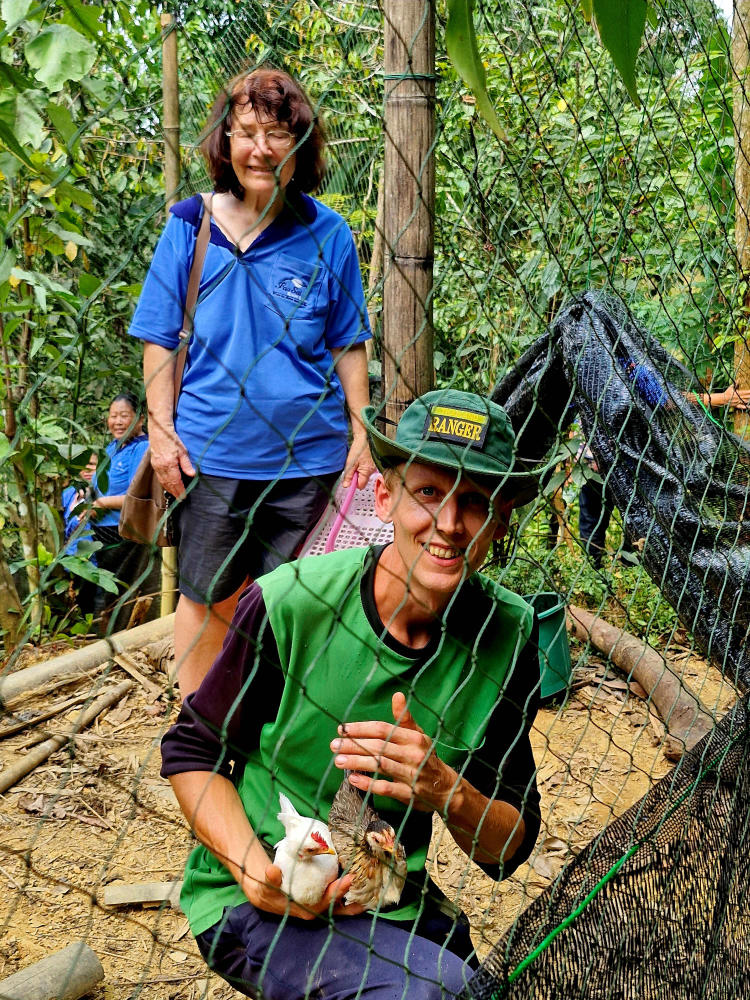
We used to host volunteers, but have since shifted our focus on climate adaptation, food sovereignty and local community work. While we still occasionally welcome guests, we now emphasize small-scale, low-tech, hyper-local & practical applications of permacultural techniques, ideas and concepts.
David B. Lauterwasser
A Human Animal who loves his Natural Habitat.
Originally from Germany, Dave came to Thailand at the beginning of 2014 to work as a volunteer on a small permaculture farm in Krabi province. Initially motivated by the inherent unsustainability of the modern way of life (and the existential risks it entails), Dave sought to return to a simpler life in tune with one’s environment, and learn the basic skills needed to live off the land.
He stayed on the farm for over two years as a permanent member and finally took over stewardship of the place when the owners moved to a different province.
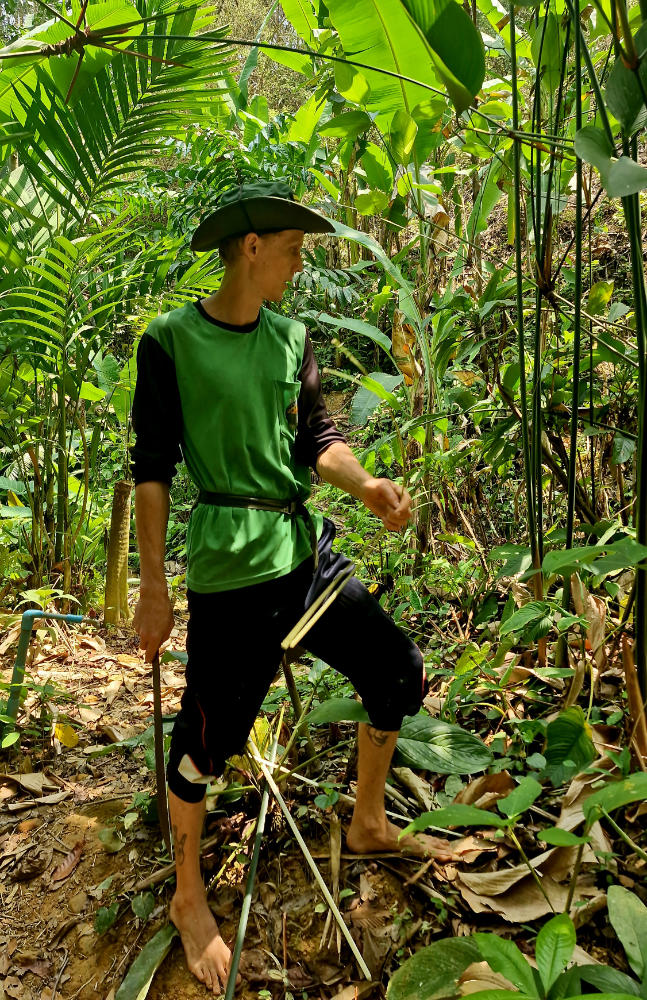
After meeting his wife Karn in late 2016, they hosted volunteers together for another two years, before acquiring a small piece of hillside land in Chanthaburi. Thus, Feun Foo Permaculture & Rewilding was founded in late 2018.
A lifelong misfit and self-professed “jack of all trades,” Dave shuns institutionalized education, holds no official diplomas or certificates whatsoever, and is entirely self-taught.
He’s an ardent treeclimber and occasionally writes essays about his journey, the pressing issues of our time, society’s trajectory, primitivism, and a broad range of other topics.
Anuthida “Karn” Moolnam
A humble spirit inspired by Indigenous Teachings and Original Wisdom from Mother Nature.

Karn grew up on a rice farm in the countryside of northeastern Thailand, where she learned the basics of what is now known as “minimalist simple living” from an early age. The first in her family to graduate from university, she worked for half a year in the hotel industry before deciding that city life isn’t as wholesome and rewarding as the simple life in Nature, thus turning her back on a promising (but ultimately unfulfilling) career.
Together with her husband Dave she founded Feun Foo Permaculture & Rewilding in 2018 and has been practicing permaculture for about a decade.
Karn has plenty of experience with subsistence farming and enjoys it a great deal – it is like reliving childhood memories for her. Moreover, her down-to-earth upbringing also provided her with an impressive knowledge of the uses and benefits of plants, making her a skilled forager, wildtender and gardener.
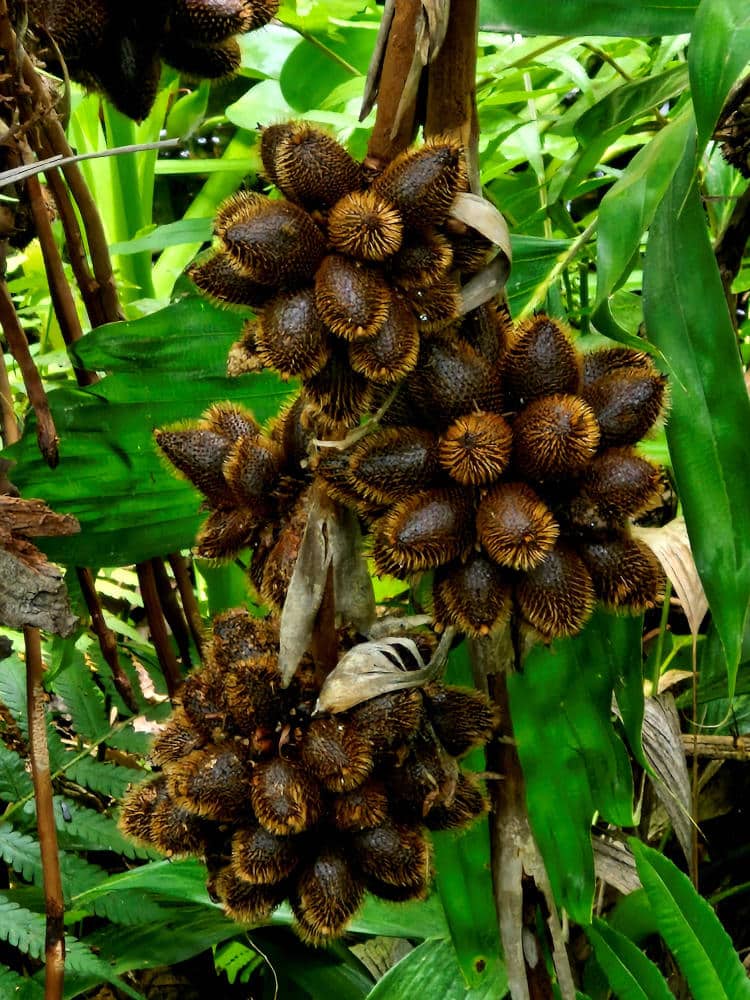
She’s a passionate seedkeeper and “jungle chef” with a keen interest in indigenous wisdom.