
Indian seed conservationist Krishna Prasad travelled to Nakhon Ratchasima to meet Loong Choke at his Bamboo Forest School, the site that will host the 16th International Permaculture Convergence (IPC16) in 2026. This is his account of the magical bamboo world created by Thailand’s Uncle Choke.
“KP, today I’m taking you into the world of bamboo.”
These words from my friend Michael Commons, as we sipped our morning coffee, immediately sparked my curiosity. I had travelled to Thailand to attend an agriculture conference, never imagining that such a remarkable experience awaited me.
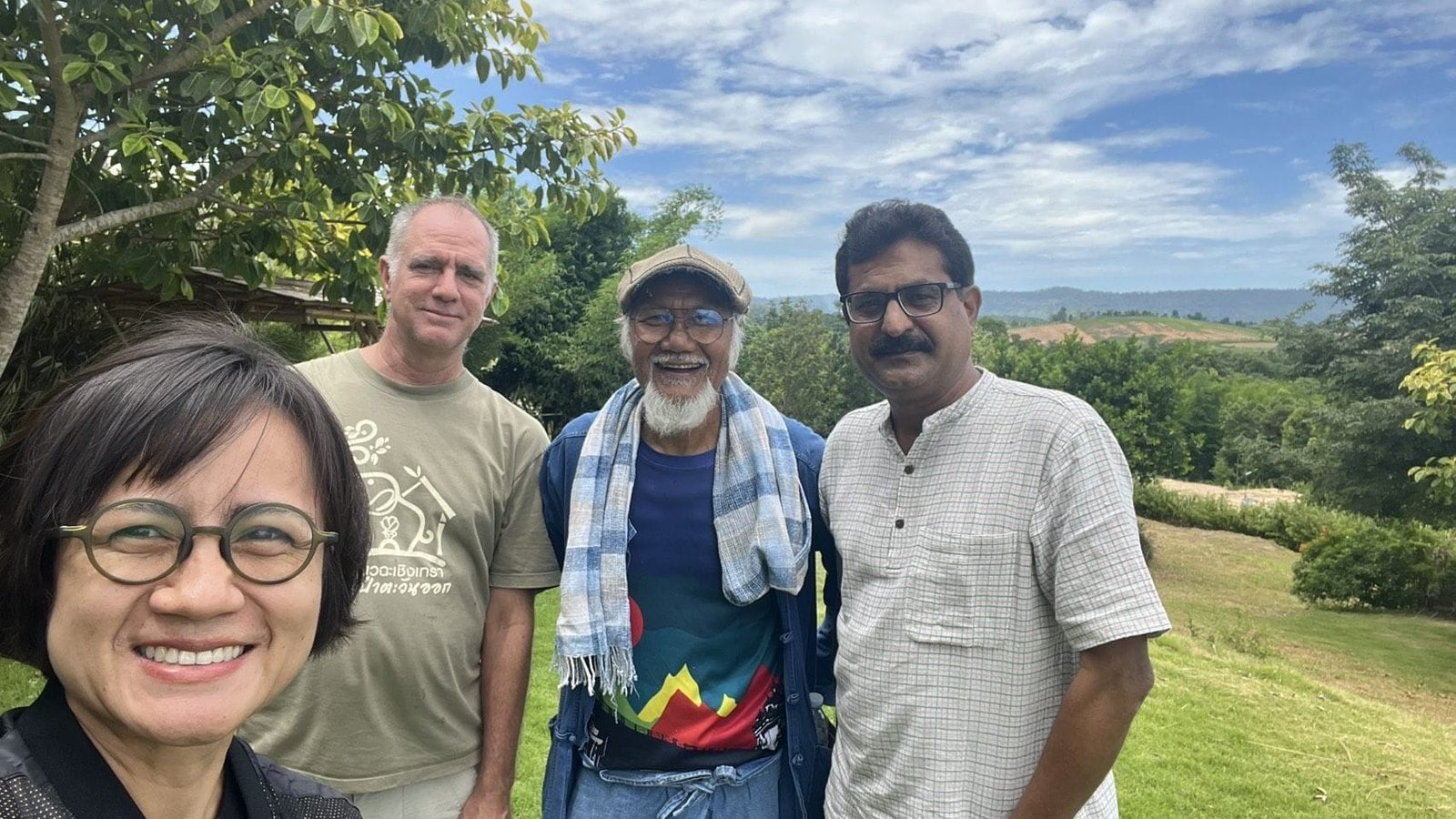
After a three-hour drive from Bangkok through lush green hills, winding roads, and landscapes reminiscent of coffee estates, we turned towards a signboard that read Bamboo Forest School, near the Cambodian border. From that moment, it felt as though we had entered another world.
Everywhere You Turn, Bamboo
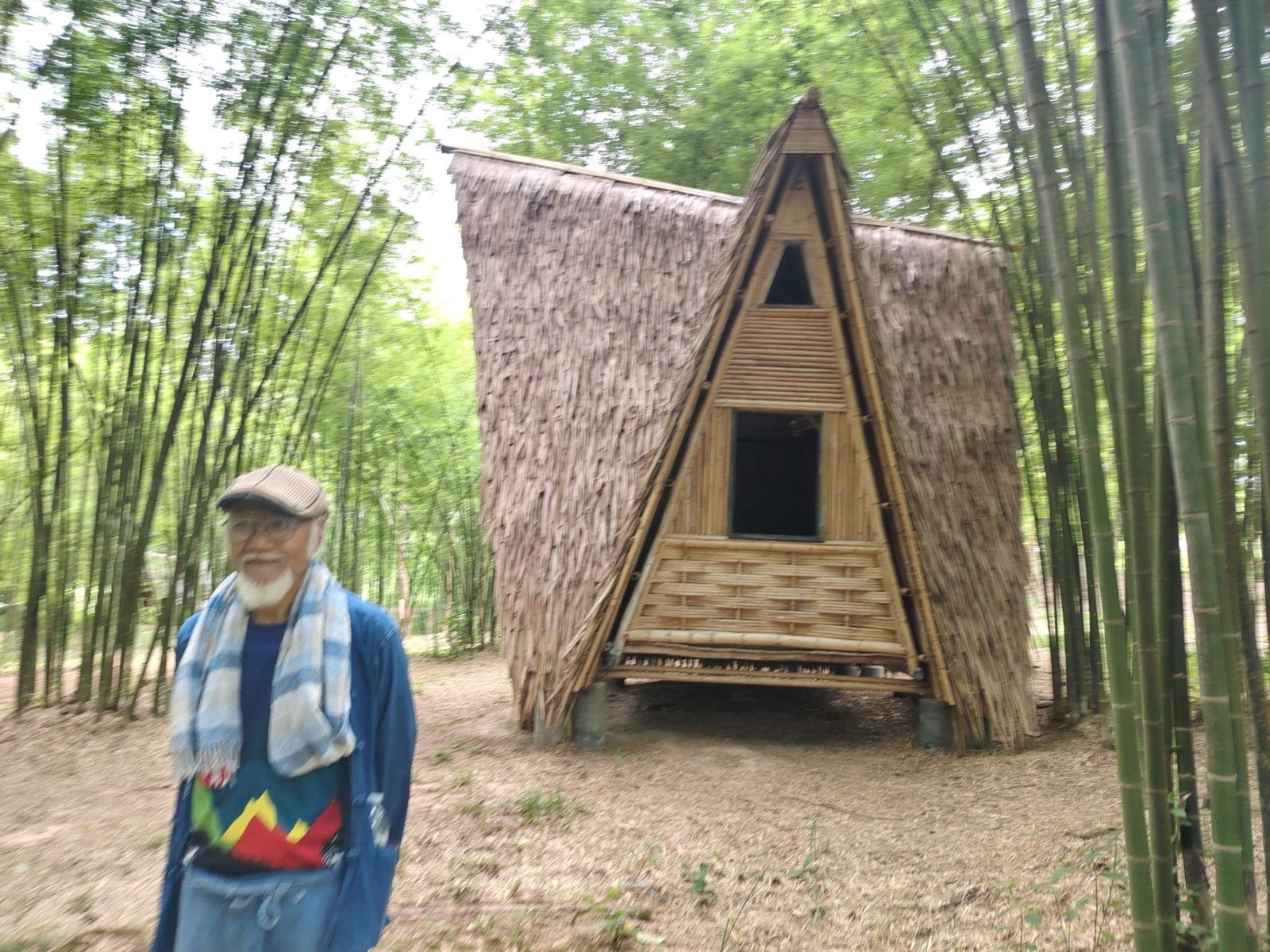
Bamboo groves. Bamboo houses. Bamboo bridges. Chairs, tables, baskets, handicrafts, guesthouses. Everywhere I looked, there was bamboo. Everything was made of bamboo. The bamboo world I had imagined for years stood vividly before my eyes.
For the past year, together with my friend Jabeevulla from Davanagere, we have been building a movement called Bidiru Balaga (Bamboo Collective) to create new interest in bamboo cultivation across Karnataka. But wherever we meet farmers, they ask the same question: “If we grow bamboo, who will buy it? Will it fetch a good price?”
It was not just the farmers’ question. It was mine too.
I have always believed that the future of bamboo lies not merely in its cultivation, but in its utilisation and value addition. I was searching for a living example that could prove this belief. Standing before me was that answer: Loong Choke, affectionately known to everyone as Uncle Choke.
Meeting the Fukuoka of Bamboo
The moment I met him, he reminded me of Masanobu Fukuoka, the pioneer of natural farming in Japan. White hair, a calm face, a childlike smile, and an unhurried walk. There was no showmanship in his words, only the quiet confidence that comes from decades of experience.
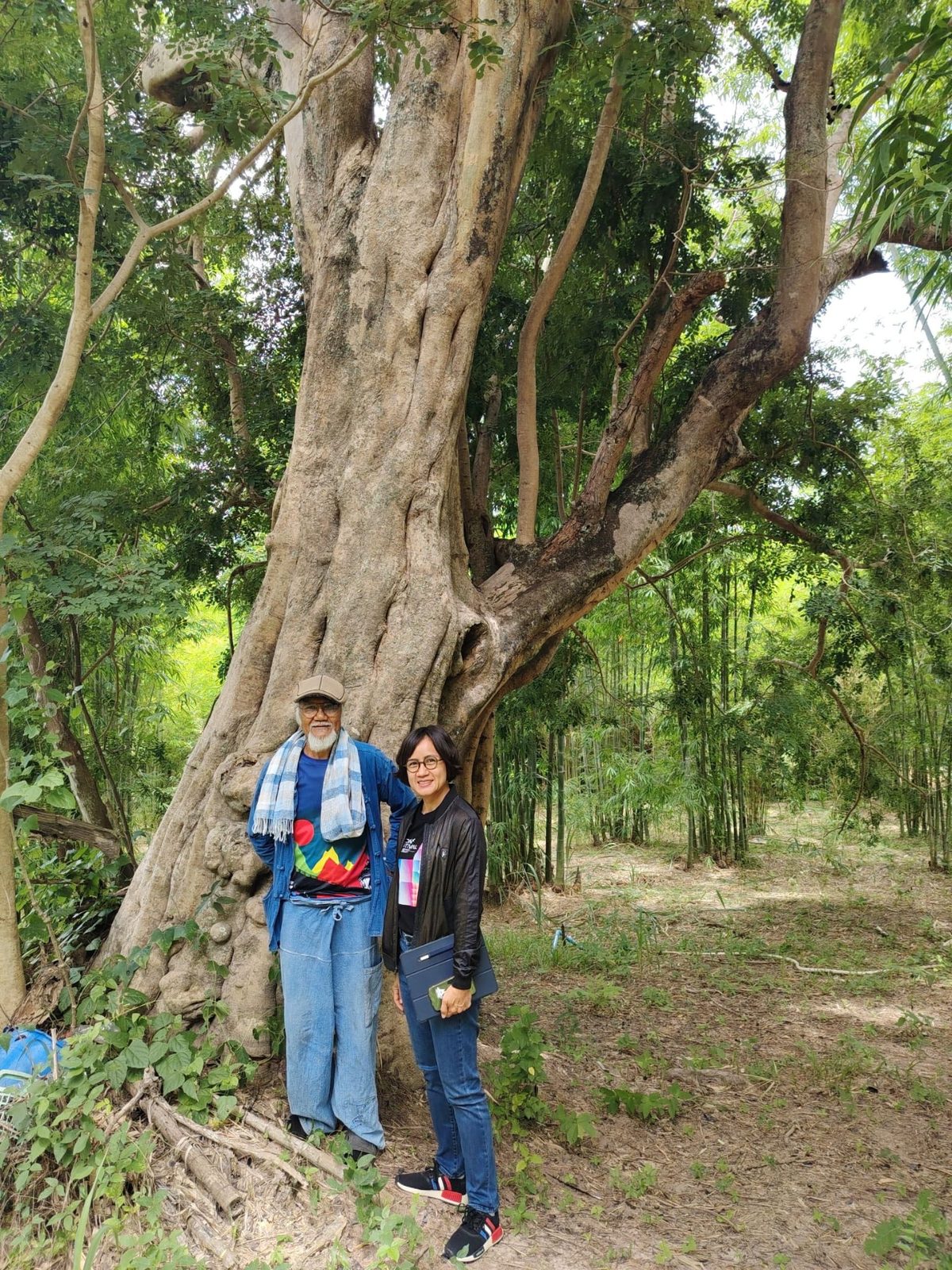
Originally, Uncle Choke was an agricultural teacher. He taught at Wanakaset, one of Thailand’s renowned forest farming training centres, where he spent many years promoting ecological agriculture. About twenty-five years ago, he returned to his native village and began experimenting with different crops on land inherited from his mother. Fruit trees flourished. Forest species thrived. Timber trees grew well.
But one plant outperformed them all: bamboo.
“I did not choose bamboo,” Uncle Choke says with a smile. “The land chose bamboo for me.”
That single observation changed the course of his life. He began travelling across Thailand, collecting bamboo species from every corner of the country. Some came from remote forests. Others were exchanged with farmers. Rare species took years of searching.
A Living Gene Bank for Bamboo
Today, more than one hundred bamboo species thrive on his forty-acre farm. It is far more than a plantation. It is a living gene bank for bamboo.
“People see bamboo only as poles,” says Uncle Choke. “But bamboo can build homes, provide food, become furniture, clothing, baskets, raw material for industries, protect the environment, and generate income for farmers.”
His farm is living proof of these words.
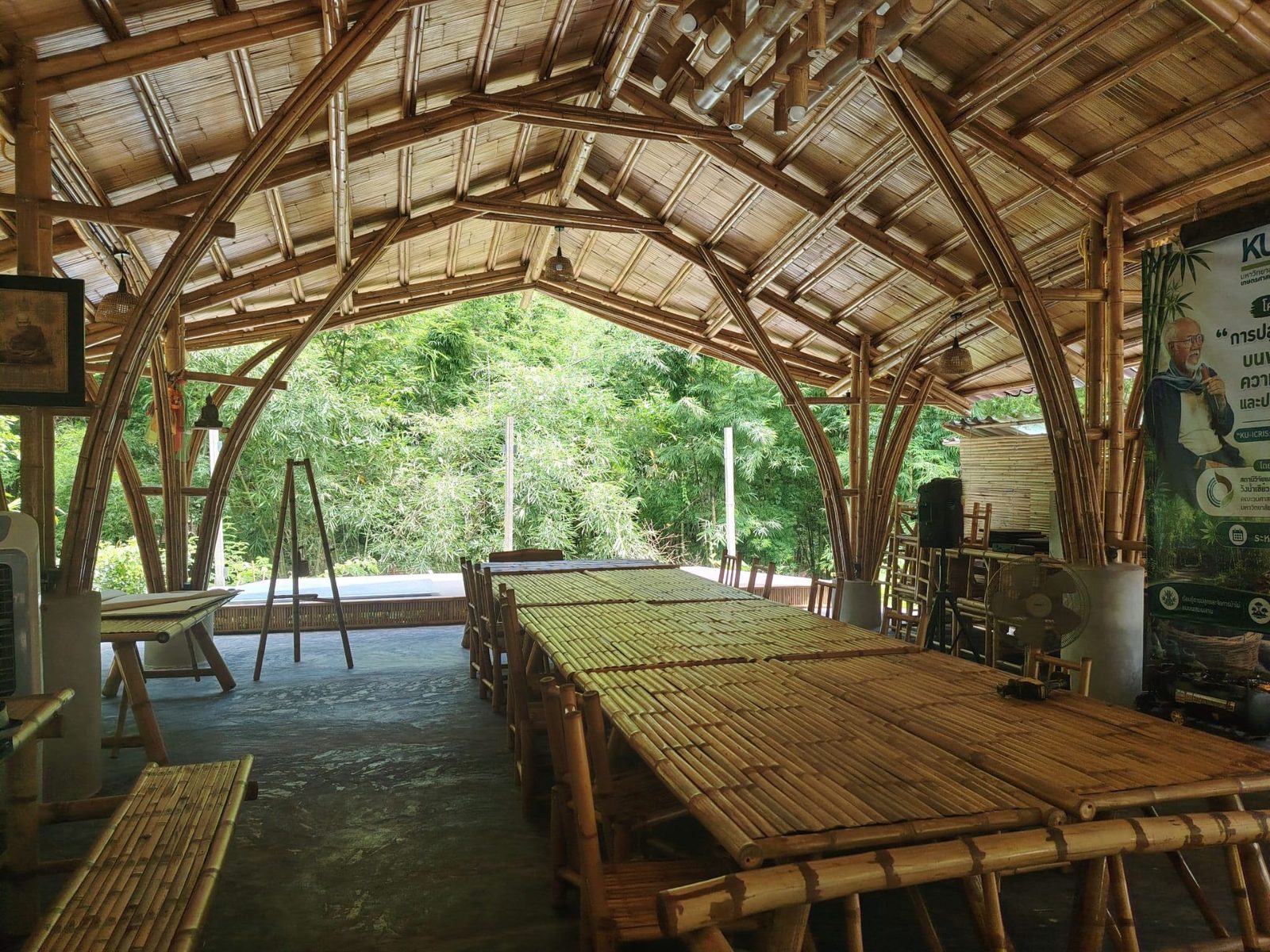
The conference hall is built of bamboo. So are the guesthouses. The tea trays are bamboo. Chairs, tables, bridges, fences, decorative pieces, everything is crafted from bamboo. Even the coat he was wearing was made from bamboo fibre. There could hardly be a better example of how one crop can become an integral part of everyday life.
Here, bamboo is not merely cultivated. It is deeply understood. Which species is best for construction? Which one is ideal for furniture? Which produces edible shoots? Which is ornamental? Which grows fastest? Which tolerates drought the best? Every species has its own story and purpose.
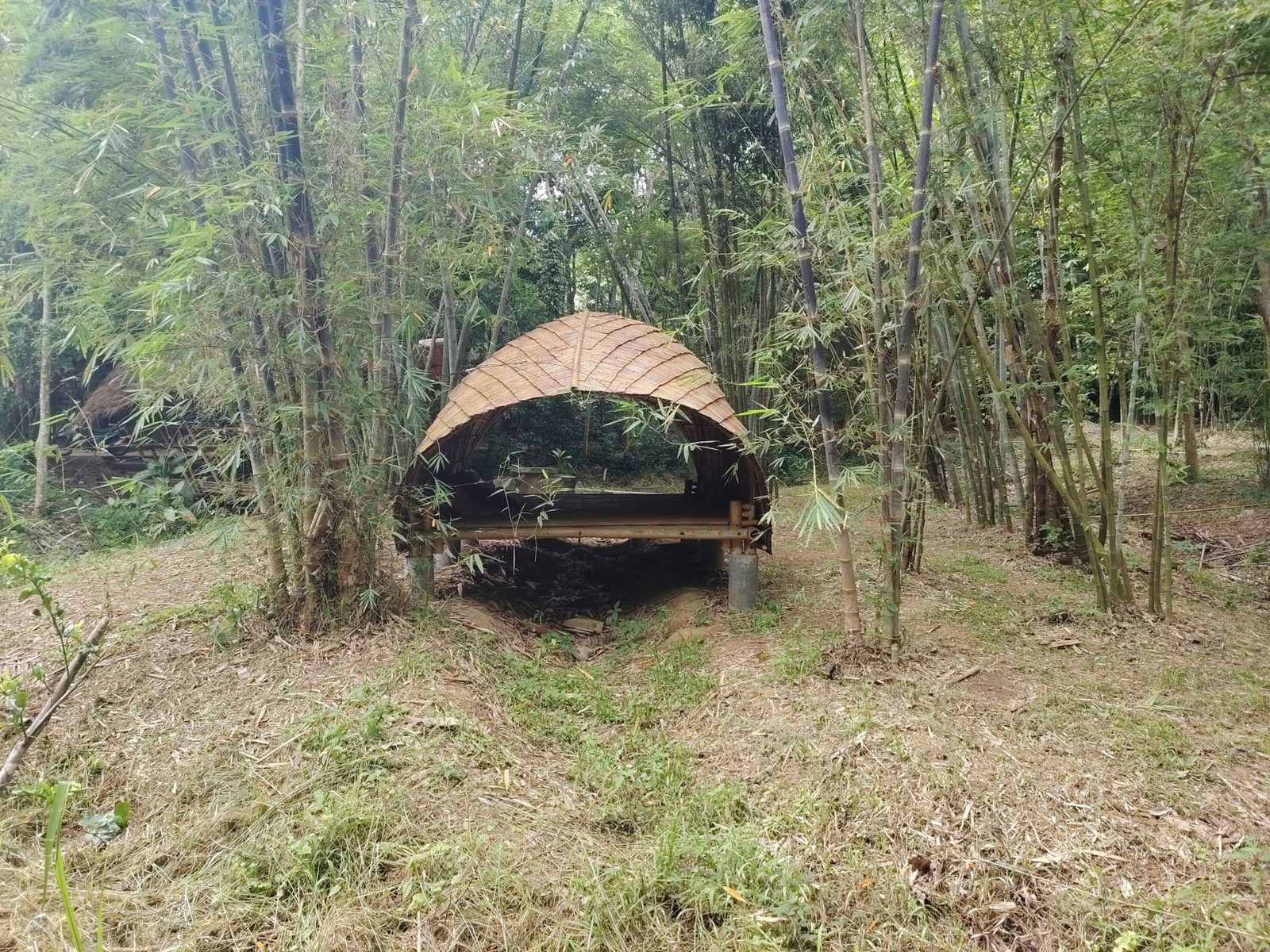
Walk through this bamboo world yourself
In 2026, Loong Choke’s Bamboo Forest School becomes the home of the International Permaculture Convergence. The groves, guesthouses and bamboo halls in this story are the very grounds where permaculturists from around the world will gather for IPC16.
Quality is the Secret
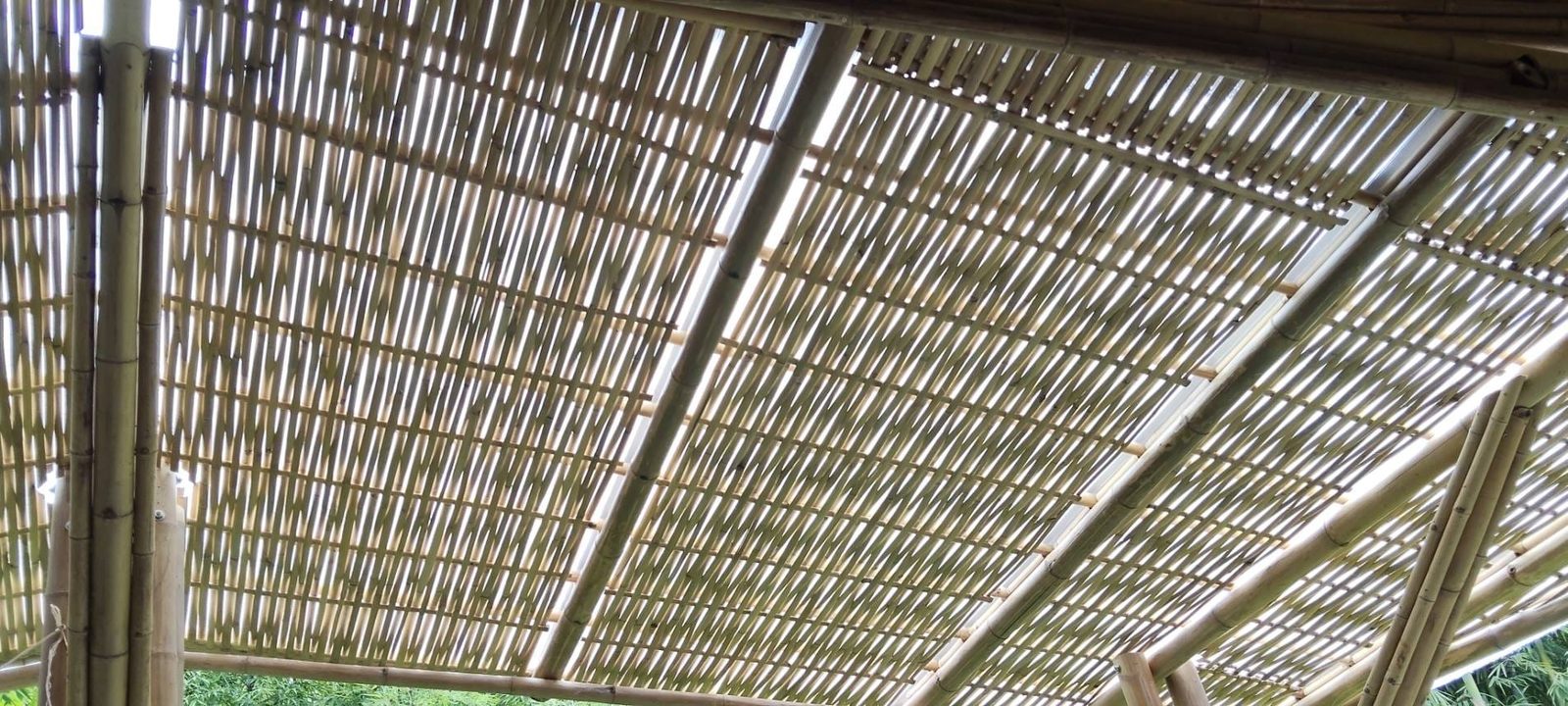
Another secret behind Uncle Choke’s success is his uncompromising focus on quality. He never sells freshly harvested bamboo. It is harvested only at the right age, scientifically treated, preserved in a borax solution, and carefully dried before reaching the market. This systematic processing is why his bamboo commands premium demand.
A School for the Whole Value Chain
Today, the Bamboo Forest School has become a learning destination for farmers, students, architects, and environmentalists from around the world. The school offers hands-on training covering the entire bamboo value chain, from nursery production and cultivation to bamboo construction, processing, value-added products, and marketing.
Uncle Choke firmly believes that growing a crop alone is not enough. Farmers must also acquire the skills to process, add value, and build enterprises around it. That, perhaps, is the greatest lesson he taught me.
A farmer does not simply need a new crop. A farmer needs a new market, new skills, and a new economy built around that crop. That is the most valuable lesson I learned from Uncle Choke.
Suan Loong Choke’s Bamboo Forest School, in Nakhon Ratchasima, will welcome permaculturists from around the world when it hosts the 16th International Permaculture Convergence (IPC16) in 2026.
Explore on the directory
This article was originally published in Kannada in Andolana, the daily newspaper of Mysuru, India.